
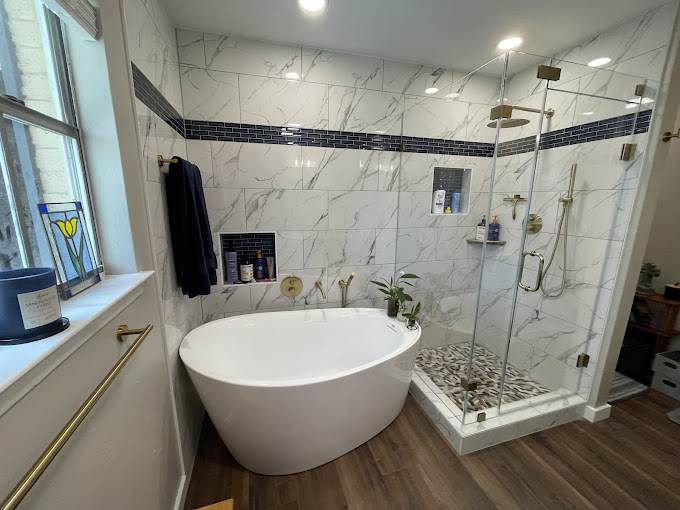
Prevent Mold With Proper Shower Enclosure Seals
If you are seeing dark spots around the shower doors or along the edges of your shower enclosure, the cause is often not a “dirty home” problem. It is usually a moisture management problem. This guide explains how shower enclosure seals work, what to inspect around your frameless shower doors or sliding shower doors, and what to fix first to reduce leaks and help keep your bathroom drier in Dallas, TX.
After a few months of use, you may notice mildew creeping along the edges of your shower glass enclosure, especially near the door track, corners, or where the glass meets the wall. You can scrub it, but it seems to come back faster than you expect.
That pattern is a clue. Shower enclosure seals are what help control where water goes, so when they are worn, misaligned, or missing, moisture can slip outside the enclosure and feed mold. Below, you will learn what to check first, what “good” looks like, and when shower door replacement or shower glass replacement is the practical next step.
- Quick answer
- What to check first
- Main things customers should understand
- Why this matters in Dallas, TX
- Common mistakes to avoid
- Customer checklist
- Frequently asked questions
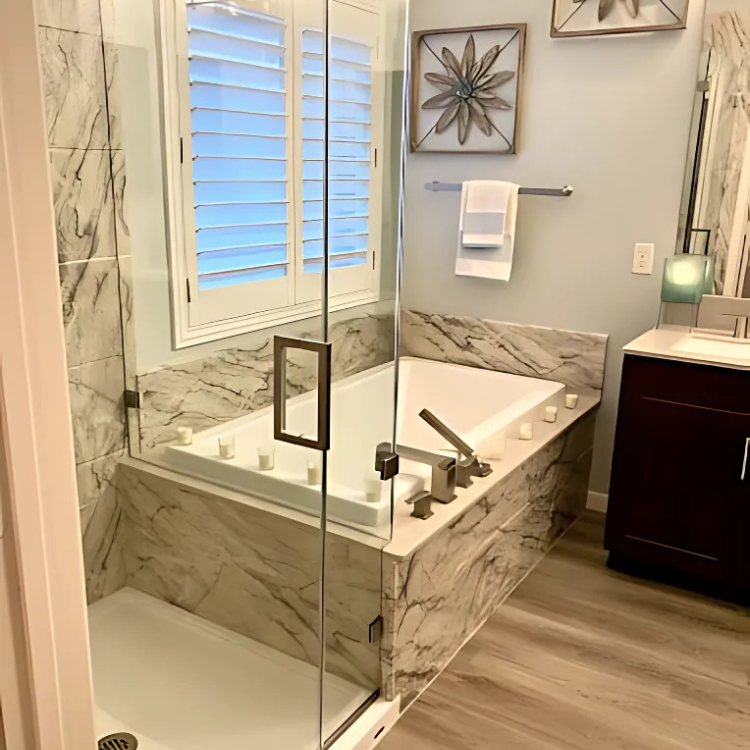
Quick Answer
If you want to prevent mold, focus on the seals and contact points where water could escape. Inspect the door sweep, edge seals, and any gasket areas around hinges, sliding tracks, and corners. Look for gaps, flattening, cracks, or seal material that no longer touches the glass or wall consistently. A practical next step is to clean the area, dry it fully, then run the shower and watch where water escapes. If the seals do not sit evenly or the glass does not align, plan for shower door installation or shower glass installation adjustments rather than only re-scrubbing.
What to Check First
Start with the places that see the most movement and the most water. In most shower enclosures, that means the door edge or sweep, the vertical seal along the glass, and the points where the enclosure meets the walls or curb. Even small gaps can let water migrate onto tile grout, drywall edges, or the underside of the track area.
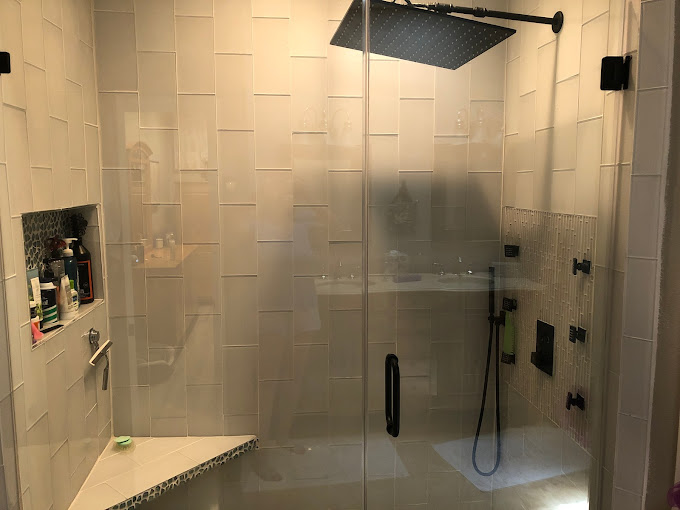
Door edge and sweep
Check whether the sweep or bottom seal makes even contact along the full width. If it is uneven, curled, or has lost flexibility, water can escape during each shower.
Sliding shower doors track areas
Look for worn contact strips and debris that prevents smooth closing. If the door does not close fully, seals cannot do their job.
Corner and wall contact
Inspect where the glass panels meet the walls. Caulk lines and seal edges should be continuous, not cracked or separated.
For homeowners in Dallas, TX, it can help to do a “dry-run observation” after cleaning. Turn the shower on for a few minutes, keep the bathroom fan on if you have one, and watch for the first spot where water escapes. If you see water appearing outside the enclosure near the same seam every time, the seal contact is likely the problem.
Main Things Customers Should Understand
Seals do not only prevent splashes. They control moisture distribution. When a seal compresses evenly and returns to position after the door closes, it helps keep water inside the shower glass enclosure. When the seal is stretched out, hardened, or not aligned, water finds the path of least resistance and can end up on grout lines and adjacent surfaces.
Professional observation: In many Dallas bathrooms, the enclosure may look “mostly fine” from across the room, but the seal contact is the real story. If the door does not close consistently, even a small misalignment can lead to repeat moisture escape.
| Condition you notice | What it usually means | Practical next step |
|---|---|---|
| Water consistently escapes near the bottom edge | The door sweep or bottom seal may not contact evenly | Have the seal contact and alignment checked during shower door installation or shower door replacement |
| Water appears along a vertical glass edge | The edge seal may be worn, cracked, or not seated properly | Schedule a seal and fit evaluation as part of shower glass installation |
| Water leaks at a corner or wall seam | Gap at wall contact or compromised sealing at the perimeter | Address the enclosure sealing points during shower enclosures service |
| Sliding doors do not close smoothly | Track buildup or worn components preventing full closure | Get sliding shower doors adjustment and component review before replacing only the glass |
Why This Matters in Dallas, TX
Dallas bathrooms often see frequent showers and year-round humidity from daily routines. Even without heavy weather events, repeated moisture exposure can shorten the lifespan of grout and make mildew more likely to return. Seals that work well keep water inside your glass shower doors and reduce the amount of moisture that reaches outside edges where mold can start.
If your home has older tile work or a shower curb that is not perfectly flat, the enclosure still needs to be fitted so the seals compress where they should. That is why custom shower glass and careful fit matter, especially with frameless shower doors and corner shower enclosures where multiple contact points need to line up.
Look for repeat leak zones
Mold usually follows a repeat moisture path. Identify whether the leak happens at the same seam every time.
Prioritize the seal contact points
Fixing a failing seal is often more effective than only cleaning mildew after it forms.
Match the enclosure style to the fit needs
Different door types create different sealing demands, especially for sliding shower doors and hinged shower doors.
Get a seal-and-fit review for your shower enclosure
If you are seeing mold around your shower doors in Dallas, TX, a targeted inspection can help identify whether the issue is sealing contact, alignment, or the enclosure style. Start the conversation with Shower Doors of Dallas.
Contact Shower Doors of DallasCommon Mistakes to Avoid
People often try to solve mold by cleaning more aggressively, but the moisture source is usually still there. Another common issue is replacing only the glass while leaving seal alignment problems untouched. If the enclosure does not close correctly or seals do not compress evenly, mold can keep returning.
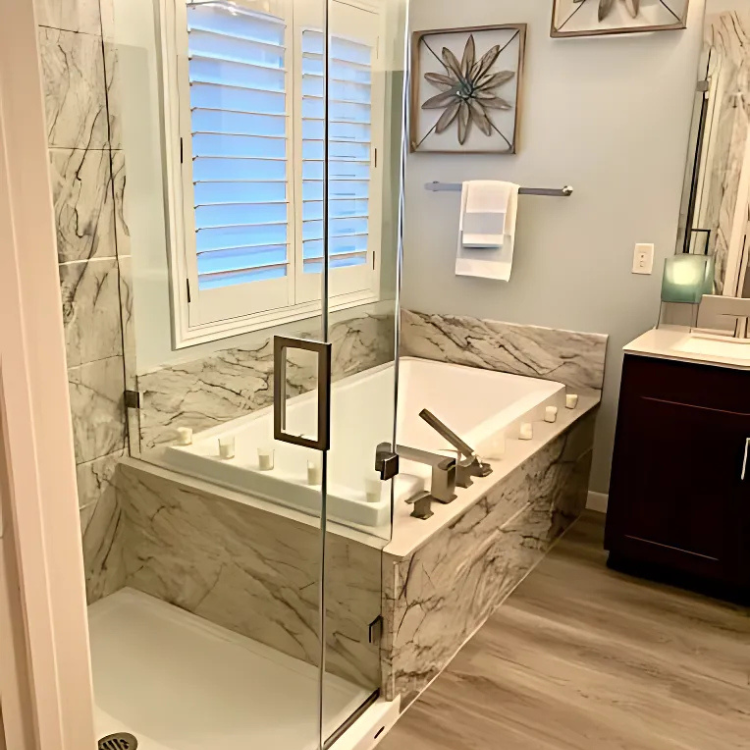
- Scrubbing mold without checking seal contact. If the water keeps escaping, mildew will reappear.
- Assuming all leaks are “caulk only.” Seals, sweeps, and edge contact points often drive the problem.
- Replacing glass without verifying alignment. A custom glass panel still needs correct fit and proper seal compression.
- Ignoring sliding door closing issues. If the door does not fully close, seals cannot maintain a consistent barrier.
- Letting track debris build up. Even a small buildup can affect closure and sealing performance.
Customer Checklist
Use this checklist before you call for help. It helps you describe the issue clearly and supports a more efficient inspection for shower door installation, shower glass installation, or shower door replacement.
- Identify where you see mildew first (bottom edge, vertical seam, corners, or track area).
- After cleaning, dry the enclosure fully, then run the shower for 2 to 3 minutes and watch for the first escape point.
- Check whether the door closes fully and evenly along the entire edge.
- Inspect seals for visible gaps, flattening, cracks, or areas that no longer touch the glass or wall.
- Confirm that sliding shower doors glide smoothly and align when closed.
- Note whether the problem started after a door adjustment, a glass replacement, or a remodel.
A representative Dallas scenario (what we typically see)
A homeowner in Dallas, TX replaced worn bathroom fixtures and noticed mildew started appearing along the outside edge of the shower enclosure within a few weeks. The shower glass looked clean inside the enclosure, but water marks kept showing up near the bottom area of the door and along one vertical edge. After a closer look, the bottom sweep did not compress evenly when the door was closed, and the door did not settle into the same closing position every time.
Instead of only re-scrubbing, the practical fix was to review the seal contact and enclosure fit. That process focused on the sealing points that control moisture, which helped reduce the repeat escape path that was feeding mold.
Frequently Asked Questions
Can mold come back even if I clean the shower regularly?
Yes. If water is escaping outside the shower enclosure, cleaning alone may not stop the moisture source. Mold often returns where seals or sealing contact points fail, such as the bottom edge near the door sweep, a vertical glass seam, or a corner where the enclosure meets the wall. A practical approach is to dry the area thoroughly after cleaning, then observe for where water appears first during a short shower run. If the leak is repeatable at the same seam, the next step is seal and fit evaluation, not just more scrubbing.
What should I look for in frameless glass shower doors?
With frameless shower doors, customers often focus on the glass itself, but the sealing interface matters just as much. Inspect the door sweep and edge seals for even contact, and check corners and wall seams for gaps. If the door does not close consistently, seals may not compress evenly, which can allow moisture to escape. If you notice water marks forming along a consistent line outside the enclosure, it is a strong indicator that seal contact or alignment needs attention as part of shower glass installation or shower door replacement.
Are sliding shower doors more prone to leaks?
Sliding shower doors can leak if the door does not close fully or if the track area affects alignment. In many cases, the issue is not the sliding style itself, but what prevents smooth closure. Debris in the track, worn sealing components, or misalignment can reduce seal compression and let water escape. If you see the same leak zone every time you shower, start by observing door closure and seal contact. Then consider a component review and adjustment as part of sliding shower doors service.
Should I replace the caulk or the shower door seals?
Often, you need to address both, but the best starting point is identifying the repeat moisture path. If mildew appears right along a seam where the door closes, sealing contact points and the door’s sealing components are usually the priority. If water is escaping at a perimeter joint between the enclosure and the wall, the perimeter sealing may also need attention. A practical recommendation is to run a short shower test after drying the area and note where water first appears. That observation helps determine whether the issue is primarily seal compression at the door or sealing at the perimeter.
When does shower glass replacement make sense?
Shower glass replacement becomes practical when the enclosure cannot be made to fit correctly, or when a glass panel is part of a wider enclosure update that restores proper sealing contact points. If the seals are failing but the enclosure and fit can be corrected, the focus may be on seal contact and alignment. If the enclosure is outdated, damaged, or no longer aligns with the rest of the bathroom surface, a replacement may be the more durable path. For Dallas, TX homeowners, the decision typically depends on whether the enclosure can be re-fitted to compress seals evenly.
Ready to reduce moisture around your shower doors?
Shower enclosure seals are small components with a big job. If mold keeps returning around your shower glass enclosure in Dallas, TX, Shower Doors of Dallas can help you evaluate sealing contact, sealing points, and shower door options.
(214) 530-5483About Shower Doors of Dallas
Shower Doors of Dallas helps homeowners and property managers in Dallas, TX and surrounding areas with shower doors and custom glass solutions. If you are evaluating Custom Shower Glass, Frameless Shower Doors, Sliding Shower Doors, or complete Shower Enclosures, you can explore related services here: shower enclosures, frameless shower doors, sliding shower doors, and custom shower glass. They also provide custom interior glass and options like custom interior glass and custom mirrors for coordinated bathroom design.

Shower Doors of Dallas
Serving Dallas, TX & surrounding areas with shower door installation and custom glass solutions to help keep your bathroom looking cleaner for longer.