
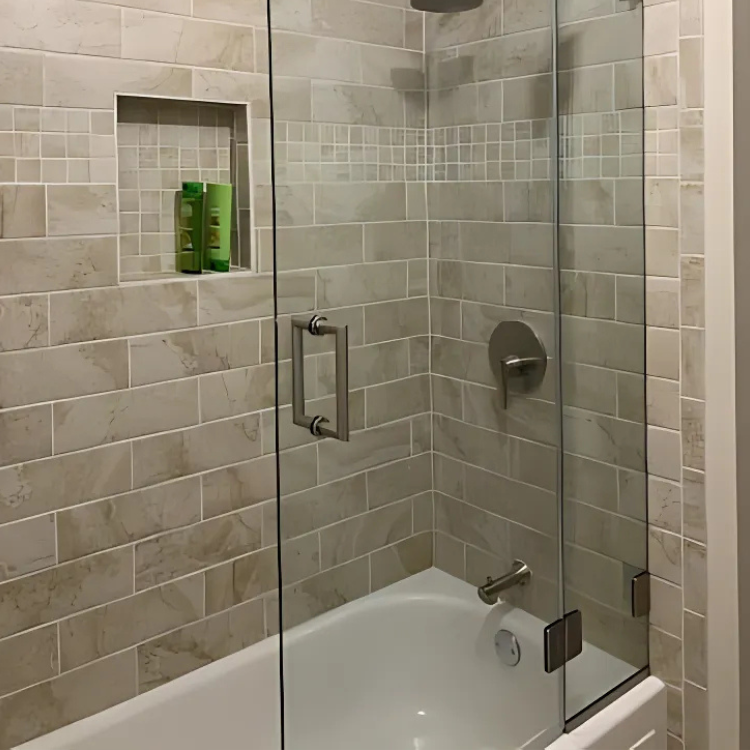
Frameless Shower Doors for Resort-Like Spa Calm
A homeowner in Plano recently told me their remodel was “almost done” — new tile, fresh paint, upgraded fixtures — but the shower still felt visually heavy. The culprit wasn’t the tile choice or the lighting. It was the framed glass system: dark metal uprights and thick profiles that interrupted sightlines and made the bathroom feel smaller than it was. On top of that, the older door didn’t close as tightly as they expected, so water would creep out at the threshold after busy mornings.
In North Texas, that “out of sight, out of mind” problem shows up fast. Hard water leaves mineral haze on glass, and every tiny gap in a shower door becomes a maintenance headache. The good news: when you switch to modern frameless shower doors with the right hardware, glass thickness, and install details, you can get that resort-like calm—clean lines, brighter reflections, and fewer issues over time.
Quick Answer
Frameless shower doors use minimal metal framing and larger, clearer glass panels to create an open, spa-style look. For best results, you need correct measurements, proper glass thickness (typically tempered safety glass), strong hardware rated for door weight, and a well-planned water management system (slope, seals, and threshold details). In Dallas-area homes, choosing hardware and installation practices that handle humidity and hard-water scale makes a big difference in how the shower stays clear and functions year after year.
Why Frameless Shower Doors Feel Like a “Spa Upgrade”
When homeowners say “spa calm,” they usually mean three things:
1. Less visual interruption. Framed systems add vertical and horizontal metal lines that break up the room. Frameless designs keep those lines minimal, so your bathroom looks larger and cleaner.
2. Better light reflection. Clear glass bounces light around the space—especially helpful in bathrooms that don’t get great natural daylight.
3. A tighter, more deliberate closure. A well-installed door aligns smoothly, closes consistently, and reduces the chance of water escaping onto the floor or outside the enclosure.
From an installer’s standpoint, the “calm” effect isn’t just aesthetic—it’s structural and functional. The door movement, alignment, and seal contact points determine whether the system feels solid or annoying. That’s why I always pay close attention to how the opening is framed (even in tile-heavy remodels) and how the walls are finished before anything is ordered.
If you’re exploring other enclosure styles for your layout, you can also compare options through frameless shower doors and see how different configurations change the look and workflow.
Frameless vs Semi-Frameless Shower Doors
Many homeowners hear “frameless” and assume it means no metal at all. In practice, there’s always some hardware—hinges, handles, pivot points, and sometimes a very minimal edge detail for stability and sealing. The real difference is how much visual framing you see.
Here’s how the choice usually shakes out:
| Door Type | Visual Look | Typical Best Fit | Common Tradeoff |
|---|---|---|---|
| Frameless | Cleanest lines, most open | Modern bathrooms, larger enclosures, minimalist tile | Requires precise installation and correct hardware selection |
| Semi-frameless | Slight frame presence | Budget-conscious upgrades, certain wall conditions | More visual “weight” and additional profile lines |
In the field, semi-frameless systems can work beautifully—especially when the remodel timeline is tight. But if the goal is that “resort calm” look, frameless typically delivers the most dramatic visual improvement.
What Homeowners Often Overlook
Homeowners usually focus on the tile, shower fixtures, and drain. That’s normal. But some of the biggest day-to-day comfort factors are decided before the glass even arrives:
1) The shower’s water management starts before the door
A door can be perfect and still fail early if the shower floor isn’t sloped correctly or if water pools near the threshold. In one anonymized installation we did in a North Dallas home, the door wasn’t leaking from the hinges—it was dealing with water that was repeatedly collecting along the wrong edge of the pan. The fix wasn’t “stronger caulk.” We coordinated a better water flow plan and then adjusted the closure alignment after tile set.
2) Your walls matter more than you think
Even when studs are solid, tile builds thickness—and bathrooms can be “out of plane” after waterproofing and finishing. If a contractor assumes walls are perfectly square and the glass team doesn’t account for tolerances, you can end up with a door that won’t align cleanly.
3) Hard-water clarity is a design decision
In Dallas-area water conditions, mineral deposits tend to show up faster on higher-visibility glass surfaces. Frameless doesn’t automatically prevent scale. The right approach is glass placement + maintenance plan + hardware that doesn’t trap water.
Common Mistakes That Shorten Shower Glass Lifespan
Here are the issues I see most often during shower door replacement conversations—mistakes that can make a beautiful remodel feel worn out sooner than it should.
Mistake 1: Installing the door without addressing out-of-square openings
When the opening isn’t square, the door may still close—but it closes under stress. That stress can accelerate wear on hinges/pivot hardware and create tiny gaps that allow water to escape.
Mistake 2: Choosing the wrong hardware style for the door weight and motion
A premium look depends on hardware that matches the glass size and operating direction. Using a hinge or pivot designed for a lighter configuration can lead to uneven movement and premature loosening.
Mistake 3: Underestimating seal contact and threshold details
Seals and sweeps are not optional “extras.” They’re part of the water-control system. If the threshold is too high/low relative to the door’s alignment, you’ll get inconsistent seal contact and recurring moisture outside the enclosure.
Mistake 4: Cleaning with products that dull or damage surfaces
Many homeowners use harsh chemicals thinking they’ll “cut through” hard-water buildup quickly. Some products can degrade finishes, impact coatings, or leave residues that attract more minerals. The goal is effective cleaning without shortening the life of hardware finishes or glass clarity.
Mistake 5: Treating custom glass like a commodity
Custom shower glass panels aren’t interchangeable. If you’re reusing measurements from an old framed unit without accounting for new tile thickness, waterproofing changes, or revised layout, you’re setting up misalignment.
Our Experience Installing Glass Systems in Texas Homes
Dallas and surrounding North Texas homes often follow a modern trend: clean lines, open sightlines, and updated lighting. That’s exactly why frameless shower doors are popular—because they support the aesthetic. But the installation realities here are real: humidity load, mineral content in water, and the way tile systems expand/settle over time all influence how the door should be installed and maintained.
One observation that comes up repeatedly: the “quiet” details are what keep a shower door performing. Smooth movement, consistent alignment, and correct seal pressure are the things homeowners feel every day, even if they can’t point to them.
For example, on a recent shower enclosure upgrade (anonymized), we replaced an older system with a new frameless configuration that better matched the updated tile layout. The biggest difference wasn’t just the look—it was how the door closed consistently from the first day. That consistency reduced the need for constant towel-drying around the threshold.
If your bathroom layout suggests a different opening solution, it may be worth reviewing shower enclosures and how different enclosure types handle corner geometry, clearance, and water control.
Shower Glass Planning Checklist
Before you order frameless glass, it helps to plan like the installer will.
Measurement & Layout
- Confirm exact opening dimensions after tile and waterproofing
- Verify wall plumb and alignment (not just “close enough”)
- Decide the glass configuration: fixed panel + door, corner enclosure, or full enclosure
Glass, Safety, and Hardware
- Use tempered safety glass appropriate for the panel size
- Match hardware to the door weight and swing/pivot motion
- Plan handles, pulls, and clearance for everyday use
Water Control
- Confirm shower floor slope and threshold conditions
- Choose appropriate seals/sweeps for your tile and door movement
- Plan how water will behave when the shower is in full use (not just when it’s dry)
Maintenance Access
- Consider how you’ll clean the edges and corners
- Identify where mineral buildup will be most visible and easiest to reach
Optional Project Snapshot: A Dallas Remodel That Got the “Spa Calm” Right
In a recent anonymized Dallas-area project, the homeowner wanted a bright, modern shower without changing the bathroom footprint. The existing framed door looked outdated and made the shower feel “boxed in.”
What we did differently:
- We designed a frameless configuration that maintained open sightlines while keeping water control intentional.
- We re-checked measurements after tile build-up to ensure alignment didn’t fight the door’s geometry.
- We focused on closure behavior—how the door settled and contacted the seal—rather than only installing the hardware.
Result: the bathroom looked larger immediately, and the homeowner reported less day-to-day water cleanup because the door closed consistently.
If you’re thinking about a different style for your space, this can also help when choosing between enclosure approaches like custom shower glass for more tailored panel layouts.
Dallas or North Texas Relevance: Why This Matters Locally
In Dallas and North Texas, bathrooms often deal with two realities at the same time: high humidity and hard water. Those conditions can turn small installation issues into visible problems—foggy glass, stubborn mineral buildup, and doors that start to feel less smooth over time.
Frameless shower doors help with the look, but longevity depends on the details:
- correct hardware selection for door movement
- proper alignment so seals do their job
- a maintenance plan that fits how your household uses the shower
When the glass system is planned well, you get the visual clarity homeowners want—without turning the daily routine into a cleaning project.
Signs It’s Time to Replace Shower Glass
If your current system shows these patterns, replacement may be the smarter move than patching:
- Water escapes at the threshold or along the door edges consistently
- The door no longer closes smoothly or feels misaligned
- Glass is heavily etched or permanently cloudy (not just mineral haze)
- Hinges/pivots show looseness or uneven movement
- Framed profiles trap grime and mineral buildup in hard-to-clean areas
Sometimes, homeowners only notice the issue after months of “spot cleaning.” If the door isn’t aligning properly, minerals will keep building where water repeatedly sits.
Maintenance & Planning Checklist (So It Stays Clear)
Weekly / Biweekly
- Wipe down glass after showers (especially the door edge and corners)
- Use a gentle glass cleaner suited for hard-water scale
Monthly
- Inspect seals/sweeps for proper contact and wear
- Check handle and hardware tightness (if recommended for your specific setup)
Every 3–6 Months
- Do a deeper mineral removal routine using products compatible with your glass/hardware finishes
- Reassess if water is escaping where it shouldn’t be (early fixes prevent bigger problems)
Planning Ahead
- If you’re remodeling other bathroom parts, schedule glass installation after final tile/wall finishing
- Avoid rushing measurements—precision is what keeps frameless doors looking “effortless” instead of awkwardly aligned
Glass Installation Recommendation: What I’d Choose for a Clean, Quiet Door
If you want the most reliable frameless performance, I recommend prioritizing:
- Tempered safety glass sized correctly to the opening
- Hardware matched to door motion and weight
- A design that supports strong seal contact at the door edges
- A configuration that reduces splash landing on the highest-visibility glass surfaces
And if you’re curious about other glass upgrades that pair well with a frameless shower—mirrors and interior glass can dramatically improve the “open and bright” effect—start with custom mirrors for bathroom symmetry and light flow.
You might also want to explore whether additional interior glass elements would help your layout. For example, custom interior glass can add brightness and separation without closing off sightlines, which complements the same design philosophy as a frameless shower enclosure.
FAQ
Are frameless shower doors worth the investment?
For many Dallas-area homeowners, yes—especially if you want a cleaner, more open look and you’re tired of framed profiles collecting grime. The investment is also about performance: when the door is aligned correctly and the hardware is matched to the glass size, frameless systems tend to feel smooth and close consistently. If your bathroom’s opening is difficult or the walls need additional prep, a professional measurement and install plan matters even more.
How do I prevent hard-water spots on frameless glass?
Hard water usually affects glass through mineral deposition, especially where water lingers. The best approach is a simple routine: wipe down after showers, use a glass cleaner designed for scale removal, and don’t let residue build up at edges and corners. Planning matters too—if your door placement causes splash to land on the same panel repeatedly, buildup will show faster in that spot.
Do frameless shower doors leak?
They can, but leakage is rarely inevitable. Leaks usually come from alignment issues, seal contact problems, or water management problems like incorrect slope or threshold conditions. A properly installed frameless door—with correct hardware, precise measurements, and appropriate seals—should control water reliably for everyday use.
What’s the difference between sliding and hinged options for a frameless look?
Sliding doors can work well when space is tight, but they require careful track and alignment planning. Hinged options often provide straightforward access and can be easier to keep sealed when configured correctly. Your best choice depends on bathroom layout, clearance, and how you want the door to swing open during busy routines. A glass installer can recommend the right configuration based on your specific opening.
Ready to Upgrade Your Bathroom or Interior Glass Design?
If you’re aiming for that resort-like spa calm, the best results come from planning that’s as precise as the glass itself—right measurements, the right hardware, and a water-control approach built into the design. That’s especially important in North Texas, where hard water and humidity make small issues show up sooner.
About Shower Doors of Dallas
Shower Doors of Dallas provides frameless shower doors, custom glass installations, shower enclosures, mirrors, stair rail glass, and architectural glass solutions throughout Dallas, TX and surrounding North Texas communities. The company focuses on precision craftsmanship, modern design, durable materials, and helping homeowners create brighter, cleaner, and more functional spaces through professional custom glass solutions.