
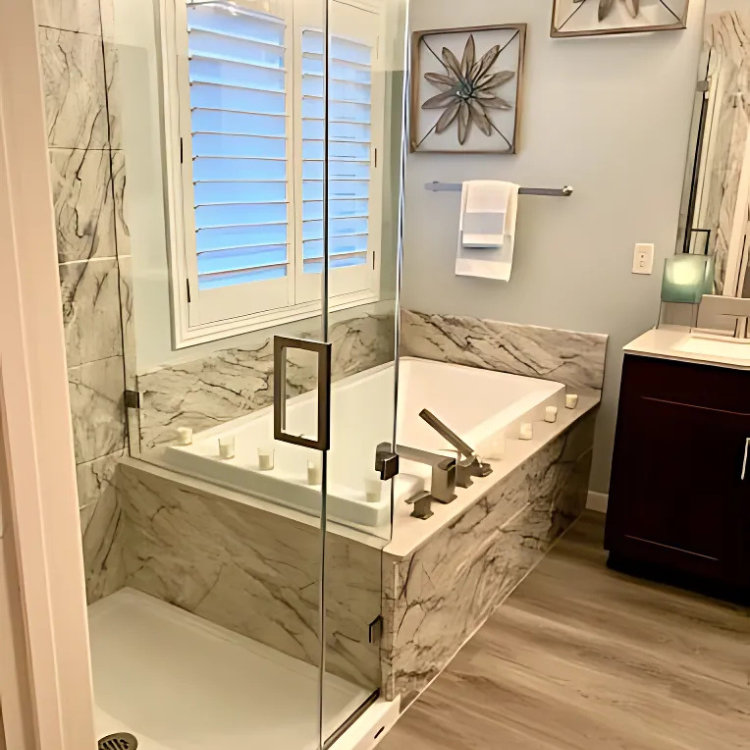
Glass Shower Doors with Minimal Frames, Maximum Light
A few weeks into a remodel in North Dallas, one homeowner called us because their “open” bathroom suddenly felt smaller than the old one. The tile looked great, the lighting was upgraded, and the new fixtures were polished—but the shower still had heavy metal framing. Every time the door opened, the frame caught light, broke the sightlines, and made the enclosure feel visually bulky.
That’s a common moment we see in Dallas-area projects: the bathroom is already expensive, but the shower system becomes the final visual anchor. If you want that brighter, cleaner look without changing your layout, minimal-frame glass shower doors are usually the turning point. Done correctly, frameless (and near-frameless) systems keep the architecture of your bathroom in view—so the room feels larger, lighter, and more modern.
Quick Answer
Frameless glass shower doors reduce visual bulk by removing most metal framing while using properly engineered hardware and safety-rated tempered glass. For the best results, plan for correct glass thickness, stable mounting surfaces, realistic water management (slope and seals), and hardware sized to the door’s weight and movement.
If your current shower has recurring water on the floor, cloudy glass, or sagging/loose hardware, a thoughtfully designed shower door replacement can solve both the look and the day-to-day function.
Why Minimal Frames Make a Bigger Difference Than You Think
When people compare shower styles, they often focus on the look of the door itself. In practice, the “frame” is also a structural and visual element:
- Visual weight: Thick metal borders and boxed framing interrupt natural light and make the enclosure feel narrower.
- Sightlines: Frameless designs allow you to see more of the tile, niche work, and ceiling—especially in bathrooms with large windows or skylights.
- Maintenance behavior: Some framed systems create more edges and seams where water and soap residue can linger.
I’ve installed a lot of showers where the tile and layout were already high-end, but the old enclosure’s metalwork was doing more than just “holding glass.” It was shaping how the whole bathroom feels. Removing those heavy lines is one of the fastest ways to make a remodel look intentional.
If you’re exploring options, you may find it helpful to review frameless shower door solutions and see how different hardware styles affect the final look.
What We Commonly See in Dallas Bathroom Remodels
In Dallas and throughout North Texas, homeowners often remodel to match a more contemporary home style—clean lines, open concepts, and bright finishes. The shower becomes a “feature zone,” not a forgotten corner.
A realistic scenario we’ve seen:
- A homeowner updates the shower tile and adds a bench and niche for storage.
- They choose a modern vanity and lighting plan.
- But the existing shower door is replaced late in the project (or kept because it “still works”).
- By the time the glass goes in, the shower needs careful re-measuring due to tile thickness changes, and the curb/drain slope may not match what a new door expects.
In these cases, minimal-frame glass can still be the right answer—but it needs to be planned with the updated tile geometry and real water behavior in mind.
Frameless vs Semi-Frameless Shower Doors
Here’s a straightforward way to think about the decision:
| Option | Visual impact | Best for | Tradeoffs |
|---|---|---|---|
| Frameless | Cleanest lines, most open feel | Most modern custom showers, walk-in looks | Requires precise mounting and well-designed hardware |
| Semi-frameless | Minimal metal, slightly more definition | When you want a touch of structure or specific layout needs | Metal accents may be visible depending on style |
From an installer perspective, the biggest difference isn’t just aesthetics—it’s how the system handles alignment, movement, and long-term stability. The clearer the sightlines, the more important it is that the door sits perfectly plumb and level.
If you’re comparing system types, it can also help to understand how different enclosures behave with room flow. For example, shower enclosure options vary in how they manage water and how they visually frame the shower zone.
What Homeowners Often Overlook
1) The shower curb or threshold details
People focus on the glass and door style, but water control starts at the base. If the curb is too low, uneven, or not sealed correctly, even a high-end door can’t fully compensate.
2) Tile “tolerances” after remodeling
New tile can subtly shift surfaces. I’ve seen showers where the tile installation changed the “true” dimensions by a small amount—enough to cause door rubbing, uneven gaps, or hardware stress over time.
3) Hardware sizing for the actual door panel
A heavier door needs proportionate hardware and proper mounting points. If the hardware is under-spec’d, you may notice problems sooner: misalignment, loose hinges, or doors that don’t close consistently.
4) Glass slope and water flow
Water should run where you want it to run. If the shower floor slope doesn’t send water back toward the drain, soap residue and mineral deposits tend to build along the “wet edges,” making the glass look worse faster.
Signs It’s Time to Replace Shower Glass (Not Just Clean It)
Cloudiness, spots, and minor etching can happen over time—but replacement becomes the right move when you see:
- Water leaking at the bottom edge even after careful cleaning
- Hinge or pivot movement that feels loose or inconsistent
- Glass wobble or flex when the door opens
- Chips or edge damage (even small chips near corners matter)
- Persistent buildup that won’t improve with proper glass cleaning
If you’re considering a full update rather than patching an aging setup, you might want to explore custom shower glass to match your exact opening, tile thickness, and hardware preference.
Common Mistakes That Shorten Shower Glass Lifespan
Mistake 1: Treating the door as “standard”
Even in similar bathroom layouts, shower walls aren’t always square. Custom glass exists because it compensates for real-world geometry—not because it’s decorative.
Mistake 2: Skipping a real measurement after tile work
If the shower enclosure is planned before tile is finished, the final measurements can be off. In Dallas remodeling projects, this is especially common because multiple trades touch the shower area (plumbing, waterproofing, tile, niches, benches).
Mistake 3: Overlooking hard water effects
Dallas-area water can be unforgiving on glass. If you don’t plan for regular maintenance (or choose a style that traps water in corners), the glass can lose clarity and the hardware can accumulate residue.
Mistake 4: Using the wrong cleaning routine
Abrasive tools and harsh chemicals can accelerate etching and degrade finishes. Over time, that can make “glass replacement” look like the only option.
Our Experience Installing Glass Systems in Texas Homes
One firsthand observation from the field: the best-looking minimal-frame installation is rarely the one with the most dramatic hardware. It’s the one where the door movement is predictable—where the glass doesn’t bind, the seals contact the right surfaces, and the enclosure aligns with how you actually use the shower.
In a recent anonymized project, we replaced an aging hinged setup with a cleaner, near-frameless system. The shower looked modern immediately. But what made it “feel” even better wasn’t the frame removal—it was the corrected alignment based on the finished tile plane. The homeowner told us the door closed more quietly and that water stayed inside the enclosure more consistently. Small alignment corrections can have a big functional impact.
Shower Glass Planning Checklist
Before ordering any glass shower door system, walk through this practical checklist:
- Confirm your finished opening dimensions (after tile, niches, and benches are complete)
- Verify shower floor slope and curb height for water behavior
- Choose glass thickness appropriate for the door size and system type
- Plan hardware based on door weight and movement (hinged, pivot, or sliding)
- Decide on seal strategy (bottom seal, side contact, and how the door meets the stationary panel)
- Select a cleaning-friendly layout (avoid unnecessary corners where water sits)
- Consider future maintenance access for hinges, tracks (if sliding), and fasteners
If you’re leaning toward a different door style—like a space-saving layout—review sliding shower enclosure options to understand how track design and water management differ from hinged or pivot systems.
Maintenance & Care: Keep the Glass Clear and the Hardware Smooth
A minimal-frame shower still needs consistent care, but the right routine is manageable.
Weekly (quick routine)
- Rinse after use if possible (even a brief water rinse helps)
- Wipe down the door and glass edges with a soft squeegee or microfiber cloth
Monthly (deeper clean)
- Use a glass-safe cleaner designed for hard water/mineral deposits
- Focus on edges, hinges, and any areas where water pools
Every 6–12 months (inspection)
- Check for loose hardware or seal wear
- Look for chips along edges and corners
- Confirm the door alignment hasn’t shifted
Dallas or North Texas Relevance: Why Local Conditions Matter
In Dallas, many bathrooms are exposed to high humidity and frequent temperature swings, especially with daily showers and open-concept layouts. That means:
- Glass can accumulate mineral deposits faster than you’d expect
- Hardware finishes are exposed to constant moisture cycles
- Enclosures that trap water in corners tend to look worse sooner
Minimal frames look best when the enclosure is designed for real water control, not just appearance. The more “open” your shower looks, the more you’ll notice poor drainage, weak sealing, or misalignment—because the bathroom’s light and sightlines make every flaw more visible.
Optional Project Example: A Clean-Line Replacement That Actually Improved Function
In one anonymized North Texas remodel, the homeowner had:
- a framed shower door that collected grime in the corners,
- recurring water on the bathroom floor near the threshold,
- and cloudy glass that never fully cleared even with frequent cleaning.
We replaced the older system with a minimal-frame configuration using custom-cut tempered glass, corrected the alignment to match the finished tile plane, and adjusted the door movement so the seals contacted properly. The homeowner didn’t just notice a visual upgrade—they also reported fewer instances of water escaping during busy mornings. That’s the real win: a shower enclosure that looks sharp and behaves reliably.
Quick Reference: Which System Fits Your Bathroom Use?
- Choose hinged or pivot if you want maximum openness and a clean look with smooth operation.
- Choose sliding if space is tight or you’re working around bathroom traffic flow.
- Consider semi-frameless when you want minimal metal but prefer a bit more structure for your specific layout.
If you’re also looking at the broader “glass story” in your home, minimal-frame shower systems often pair beautifully with other architectural glass elements. Homeowners frequently ask about coordinated designs like custom interior glass upgrades to keep the look consistent across openings, partitions, and sightlines.
FAQ
Are frameless shower doors worth the investment?
For many Dallas-area homeowners, yes—mainly because the visual payoff is immediate and the maintenance experience can be better when the system is designed correctly. Frameless doesn’t mean “no hardware” or “no planning”; it means fewer metal lines and a cleaner enclosure. If your walls are true, your measurements are correct, and the hardware is sized for the door, frameless systems are a long-term upgrade.
How thick should frameless shower glass be?
Common choices are thicker tempered glass for larger panels and doors, because thickness affects stability and how the door feels in daily use. The “right” thickness depends on door size, configuration, and hardware type. A custom installer will match glass thickness to your specific opening and movement requirements—not guess based on a generic recommendation.
Do frameless shower doors leak?
They can, if the enclosure is poorly aligned, the base/threshold isn’t sealed correctly, or the shower floor slope doesn’t direct water toward the drain. A well-installed minimal-frame door with proper seals and correct mounting is designed to reduce leakage significantly. Regular maintenance also matters, especially in hard water conditions.
What’s the best way to prevent hard water spots?
Rinse or wipe down after use, use a glass-safe cleaner, and avoid abrasive tools that can accelerate etching. In Dallas, mineral buildup can happen quickly, so consistency matters more than aggressive cleaning. If the glass is already etched, maintenance can slow further damage but may not restore perfect clarity.
Ready to Upgrade Your Bathroom or Interior Glass Design?
If you’re planning a shower door replacement—or you want a cleaner, brighter look without changing your layout—precision measurements and the right hardware decisions make all the difference. We’ll help you choose a system that fits your tile geometry, water behavior, and long-term maintenance goals.
About Shower Doors of Dallas
Shower Doors of Dallas provides frameless shower doors, custom shower glass, shower enclosures, mirrors, stair rail glass, and architectural interior glass solutions throughout Dallas, TX and the surrounding North Texas area. We focus on precision craftsmanship, durable tempered glass, and practical installation details that help homeowners achieve clean lines, better function, and long-lasting clarity.