
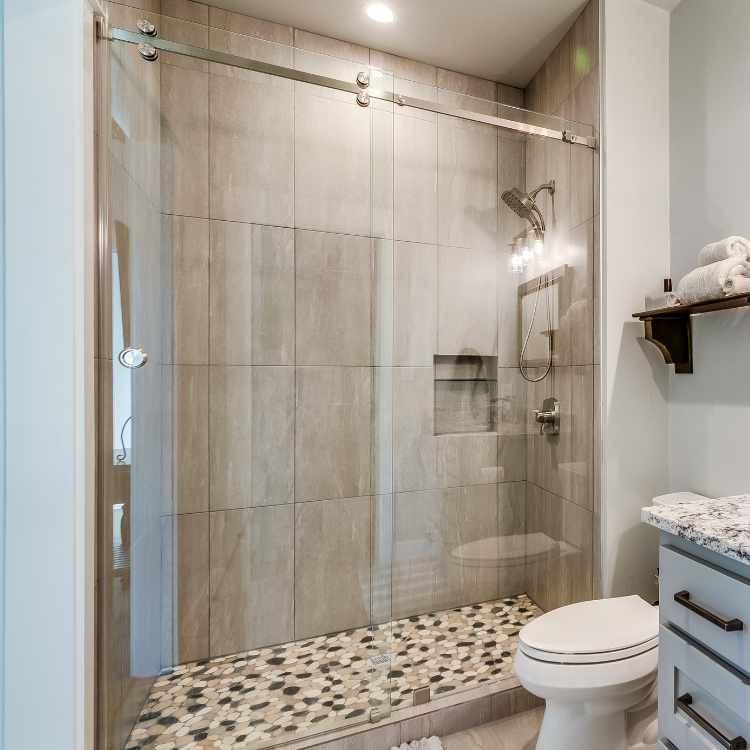
Frameless Shower Doors Offering Timeless Minimalism
A Dallas homeowner recently told us their bathroom remodel “almost worked”—the tile looked great, the new vanity lighting was perfect, and the shower felt spacious the first week. Then hard water spotting started to build up on the glass, and the framed door system they inherited began to look heavier and dirtier than the open, modern look they were going for.
That’s a common turning point in North Texas remodels. Homeowners invest in sleek tile, updated plumbing fixtures, and bright finishes—but the shower door hardware and glass layout can quietly undo the minimalist effect. If your goal is a cleaner, lighter bathroom with fewer visual breaks, frameless shower doors are usually the right direction. But the real difference comes down to planning, glass thickness, hardware selection, and installation details—not just the absence of a frame.
Quick Answer
Frameless shower doors use minimal metal framing (often none visible) and rely on properly engineered hinges, accurate measurements, and correct glass thickness to create a clean, modern look. For Dallas and North Texas homes, frameless systems also help reduce grime buildup on bulky frames, but they still require good sealing, correct shower slope, and realistic maintenance for hard water. If you’re comparing options, focus on water containment, door swing/track choices, and glass configuration more than the “frameless” label.
Why Frameless Glass Feels Different (and Works Better When Installed Right)
When we install frameless shower doors, the first thing homeowners notice isn’t just appearance—it’s how the bathroom “breathes.” Without a thick metal perimeter, the shower reads as part of the room instead of a separate box.
From an installer’s perspective, the best frameless setups have three things in common:
1. Accurate geometry at the threshold
- If the shower pan slope or curb surface isn’t correct, water will find the path of least resistance. Even the most beautiful glass will eventually show water trails or staining around the seals.
2. Hardware sized for the actual glass
- Hinges, pivots, and mounts aren’t one-size-fits-all. The hardware must match the glass thickness and door height so the door closes firmly and consistently.
3. Edges and clearances planned for real-life use
- In Dallas homes, we often see bathrooms with frequent traffic and kids’ routines—doors get pushed, pulled, and adjusted differently than in a showroom. Proper spacing helps doors align during everyday operation.
A practical example from a recent (anonymized) install
We worked on a corner shower enclosure in a North Dallas home where the homeowner wanted the “hotel look.” The tile was already installed, and the opening was slightly off-square by a small amount—nothing dramatic, but enough to cause uneven contact at the seals. The team corrected the installation tolerances and set the hardware to maintain consistent closure. The result: less water escape at the door edge and a much cleaner line of sight through the enclosure.
Frameless vs Semi-Frameless Shower Doors
Many homeowners hear “frameless” and assume it’s the same as “no maintenance” or “no hardware.” In reality, frameless refers to the visual framing—glass is still supported by hardware, gaskets, and properly anchored mounting points.
Here’s a simple comparison:
| Option | Visual Look | Water Containment (depends on install) | Best For |
|---|---|---|---|
| Frameless | Cleanest lines, minimal metal visible | Excellent when seals + alignment are correct | Modern tile layouts, bright bathrooms, corner enclosures |
| Semi-frameless | Still sleek, but some metal framing visible | Often good, but frames can collect grime faster | When budget is tighter or openings need a little more tolerance |
If you’re aiming for timeless minimalism, frameless usually wins—but only if the shower system is built for how your bathroom actually functions.
What Homeowners Often Overlook
During remodel planning, we see people focus heavily on tile color, lighting temperature, and the faucet finish. Those are important. But several shower details tend to get missed—especially when homeowners are choosing between glass styles.
1) The shower door opening plan (not just the door type)
A door that looks perfect on paper can be awkward in real life if it conflicts with towel placement, vanity clearance, or a nearby door swing. We measure and verify turning space, especially in smaller North Texas bathrooms.
2) Glass configuration that fights your layout
If the glass panels are configured without thinking through sightlines and door swing, you can end up with:
- more water contact at the curb edge,
- harder-to-clean corners,
- and a heavier visual look than you intended.
3) Hardware finish compatibility
Dallas bathrooms often include brushed nickel, matte black, or chrome throughout the remodel. If the shower hardware finish doesn’t coordinate, the enclosure starts to look “tacked on,” even if the glass is high quality.
Common Mistakes That Shorten Shower Glass Lifespan
Even with premium Custom Shower Glass, performance can fall apart when installation shortcuts happen. The most common mistakes we correct are:
1. Ignoring hard water conditions
- North Texas water hardness can leave mineral deposits that etch over time if they’re not removed. Frameless glass still needs regular cleaning—just without the extra grime traps that framed systems can create.
2. Underestimating the impact of small misalignments
- A slightly out-of-square opening can cause inconsistent seal contact. The door might “look closed,” but micro-gaps let water escape during heavy use.
3. Using the wrong threshold approach
- If the curb or threshold isn’t level and stable, the door may not close evenly. That leads to premature wear on gaskets and hinge points.
4. Choosing glass without considering safety and thickness
- Proper tempered glass isn’t optional. For shower doors and panels, thickness and engineering matter for rigidity, alignment, and long-term stability.
5. Not planning for cleaning access
- Decorative glass panels can be beautiful, but if corners are hard to reach, mineral buildup becomes a chronic issue. If you want a low-maintenance setup, design for clean access.
If you’re exploring decorative options, it can help to review custom etched glass for privacy—especially for primary bathrooms where natural light and visibility are part of the design.
Shower Glass Planning Checklist (Before You Approve the Build)
A clean, minimalist shower enclosure is mostly about precision. Here’s a planning checklist we use to keep projects on track:
Measurements and layout
- Confirm the exact shower opening width/height at multiple points (walls can vary).
- Verify the curb/threshold level and stability before ordering glass.
- Decide the door swing direction based on bathroom traffic patterns.
Glass and hardware details
- Confirm tempered glass specs and thickness for the door/panel size.
- Choose hardware that matches your finish strategy (and is appropriate for the door weight).
- Plan gasket/return details to match your enclosure type.
Water management
- Confirm shower slope and curb sealing strategy.
- Ensure there’s a practical plan for daily wipe-down and periodic deep cleaning.
Cleaning and maintenance workflow
- Choose a cleaning routine you’ll actually follow (hard water doesn’t care about intentions).
- Make sure you can reach every surface, including corners behind door swings.
Installation readiness
- Make sure tile edges are finished cleanly and waterproofing is complete before glass is set.
- Avoid rushing glass installation before grout cures and surfaces stabilize.
What Actually Improves Bathroom Functionality
In Dallas-area remodels, the “timeless” look comes from consistency—glass aligns with the rest of the architecture. Frameless systems do that naturally, but they work best alongside thoughtful design choices.
For example, many homeowners love the idea of a bright, open shower but also want privacy. That’s where custom interior glass can help beyond the shower area. If you’re planning a whole-home refresh, consider custom interior glass upgrades to keep light moving while still defining spaces.
And if your remodel includes more than one enclosure or a connected design theme, planning the glass across rooms prevents mismatched lines and uneven hardware spacing.
Our Experience Installing Glass Systems in Texas Homes
Hard water isn’t just a nuisance—it changes how glass performs visually over time. In our day-to-day installs around Dallas and North Texas, we see mineral buildup accelerate when homeowners skip early cleaning after installation and when the shower slope/threshold isn’t dialed in.
One installer observation that matters: the first few months determine the long-term look. If mineral deposits are allowed to etch into the surface early, cleaning becomes harder and the glass never fully regains that showroom clarity.
That’s also why we pay attention to:
- seal contact consistency,
- proper hinge/pivot alignment,
- and the way doors close under real use—not just during a final walk-through.
Dallas or North Texas Relevance: Why Minimalism Needs the Right Shower System
Dallas bathrooms often balance upscale materials with real humidity, daily showers, and frequent cleaning. Open-concept floor plans are popular, so the shower is visible from more angles than in older layouts. When you remove heavy framing, the space reads larger and brighter—especially with modern lighting and clean tile lines.
But that minimalist look can fail if:
- the enclosure leaks and creates recurring spotting,
- the door hardware doesn’t match the glass weight and alignment,
- or the installation tolerances aren’t handled carefully.
Choosing frameless shower doors isn’t only an aesthetic decision—it’s a performance decision. In North Texas homes, that performance shows up in maintenance time, water containment, and how long the glass stays “crisp.”
Ready to Compare Door Styles? (Quick Guidance)
If your bathroom layout makes swing doors awkward, you may want to explore sliding shower enclosure options. Sliding systems can be a great fit for tighter spaces and certain corner configurations—while still supporting a clean, modern look.
Meanwhile, for full remodels where multiple glass panels are involved, it often helps to evaluate the entire system under one plan. Many homeowners start with the shower and then realize they also need coordinated glass elsewhere—mirrors, panels, or adjacent enclosures.
What Homeowners Should Know Before Ordering Custom Glass
Before you lock in a design, ask these questions:
- Will the installation address threshold leveling and not just glass mounting?
- Are the hardware components matched to glass thickness and door dimensions?
- How will seals and gaskets handle daily use in a high-traffic household?
- What’s the realistic maintenance routine for hard water in your specific setup?
If you want additional planning support beyond the shower, many homeowners also upgrade mirrors for the same “clean line” feel. A coordinated look matters. See how custom mirrors can tie into your frameless shower design by matching proportions and placement.
Signs It’s Time to Replace Shower Glass
Consider a shower glass replacement if you notice:
- Persistent water escape around the door edge that doesn’t improve with cleaning
- Visible corrosion or loosening in older framed components
- Etching that can’t be removed with normal maintenance
- Doors that don’t close consistently (alignment drift or worn hardware)
- Cracks, chips, or stress marks in panels or corners
Replacing the system at the right time can stop ongoing cleanup and help restore the bathroom’s clean, modern appearance.
FAQ
Are frameless shower doors worth the investment?
For many Dallas homeowners, yes—especially when the alternative is dated framing that visually weighs down the space. Frameless enclosures can also be easier to keep clean because there’s less metal surface area to trap grime. That said, value depends on installation quality. If threshold leveling, alignment, and sealing aren’t handled properly, any door type can underperform.
How do I keep frameless shower doors looking clear in North Texas hard water?
Use a consistent routine: wipe the glass after showers when possible, then do a scheduled deep clean with a cleaner designed for glass and mineral removal. Early mineral prevention matters—hard water deposits can etch if they sit too long. Also, don’t rely only on “rinse and hope”; the curb edge and door seals are frequent buildup zones.
Do frameless shower doors leak?
They can, but the cause is usually installation-related rather than “framelessness.” Common drivers include poor threshold leveling, seals that don’t contact evenly, and incorrect slope that pushes water toward the door. When the enclosure is engineered and installed precisely, leakage is typically minimal and manageable.
What glass thickness should I choose?
Thickness should be based on door and panel dimensions, the hardware system, and the opening size. A professional installer will recommend specs that provide rigidity and proper alignment. Avoid choosing thickness based solely on appearance—stability and safety matter.
Ready to Upgrade Your Bathroom or Interior Glass Design?
If you’re aiming for timeless minimalism, don’t let the shower door become an afterthought. The clean look you want depends on planning, tolerances, and a hardware-and-installation approach that holds up to daily use and Texas hard water.
About Shower Doors of Dallas
Shower Doors of Dallas provides frameless shower doors, custom shower glass, shower enclosures, mirrors, stair rail glass, and architectural glass solutions throughout Dallas, TX and surrounding North Texas communities. The company focuses on precision craftsmanship, modern design, durable materials, and helping homeowners create brighter, cleaner, and more functional spaces through professional custom glass solutions.