
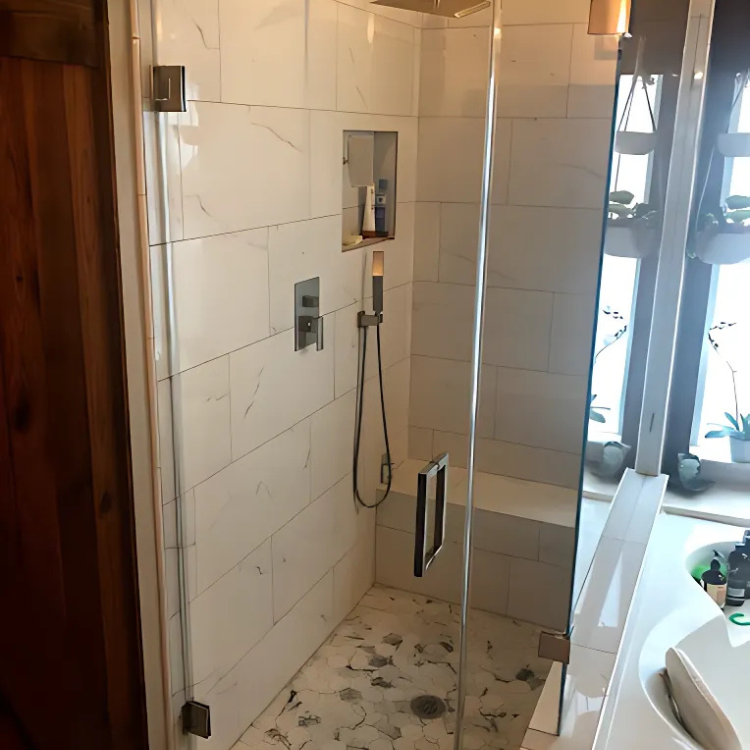
Glass Shower Doors Enhancing Texture, Color, and Light
We were called to a Dallas-area remodel where the homeowner loved the new tile—especially the warm, mottled look they’d chosen for the shower floor and niche walls. But once the bathroom was finished, everything felt muted and a little “closed in.” The culprit wasn’t the tile at all. It was the heavy, framed shower doors that visually chopped up the space and blocked the light that the rest of the bathroom was relying on.
In modern North Texas homes—especially the contemporary builds and open-concept layouts—bathrooms often need to feel brighter, cleaner, and more intentional. Custom glass shower doors can do exactly that: they preserve texture and color, reflect light through the space, and give your shower the “architectural” look that many homeowners want after a remodel.
Quick Answer
Frameless glass shower doors and custom shower enclosures make bathrooms look larger and brighter because they reduce visual bulk and let light travel through the space. For best results, the glass thickness, hardware alignment, door swing/sliding choice, and proper installation details (like sealing and panel leveling) matter as much as the design. In Dallas and North Texas, planning for hard water and humidity is also key to keeping glass clear and protecting finishes over time.
Why Texture, Color, and Light Look Better With Modern Shower Glass
A shower is more than a wet area—it’s a focal “wall” inside your bathroom. When you choose the right glass system, you don’t just change the door. You change how the entire room reads.
1) Less visual framing means the tile becomes the feature
In many remodels, homeowners spend months selecting tile patterns, niche stone, and accent colors. Then a framed system goes back in and adds metal lines right where the design should breathe. Frameless shower door solutions remove that visual grid, so the shower tile, grout lines, and niche detailing become the real texture you notice.
2) Light bounce is real—glass affects how your bathroom feels
Even with great lighting, framed doors can create shadows and “breaks” in the reflection. Clear, properly installed glass helps bounce light across walls and reduces the boxed-in feeling. This is especially noticeable in bathrooms with smaller footprints, hallway-adjacent layouts, or windows that don’t face the shower.
3) You can still add style—without sacrificing clarity
Homeowners often worry that “frameless” means plain glass. You can keep the clean look while customizing appearance through options like etched or decorative patterns, or by pairing clear panels with a designed focal element in the niche. If you want privacy without losing light, custom etched glass is one of the most practical upgrades we see.
For example, one anonymized installation: a couple in North Dallas wanted privacy from a second-floor hallway view but didn’t want the shower to feel dark. We used a clear outer panel for openness and added an etched section only where needed. The bathroom stayed bright, and the shower still felt like part of the architecture—not a separate box.
A design detail that matters: glass edge transparency
The way the glass is finished and installed affects how “lightweight” it looks. Clean edges, correct panel alignment, and proper hardware placement keep lines straight and reduce the “wobbly” look that can happen when measurements aren’t dialed in.
If you’re exploring a specific shower layout, you may also like these options:
- frameless shower door solutions for clean, minimal lines
- shower enclosures when you want a full, cohesive glass wall system
What We Commonly See in Dallas Bathroom Remodels
Scenario: the “brighter shower” plan that still feels heavy
A common pattern we run into: the homeowner upgrades lighting, replaces the vanity, installs beautiful tile, and then keeps the old door style—or chooses a semi-framed system that looks fine in photos but feels bulky after installation.
From an installer’s perspective, the biggest issue isn’t just the frame. It’s the way the frame forces thicker visual breaks at the wrong height and changes how light hits the tile. The shower can end up looking darker even though the bathroom lighting is better.
Dallas/North Texas insight: humidity + hard water show up fast
In our area, hard water and daily steam exposure can make glass look “frosty” over time if the system isn’t maintained properly. The good news: you can plan for easier upkeep by choosing the right glass treatment approach and using a maintenance routine that fits your household.
Frameless vs Semi-Frameless Shower Doors
Homeowners often ask whether semi-frameless is “close enough” to frameless. Sometimes it is—but sometimes it undermines the whole light-and-texture goal.
| Feature | Frameless Glass Shower Doors | Semi-Frameless Shower Doors |
|---|---|---|
| Visual bulk | Minimal, most “open” look | More metal lines and visual structure |
| Light reflection | Stronger clarity and openness | Can create more shadowing/line breaks |
| Hardware visibility | Clean and intentional | More framing means more visual noise |
| Best for | Modern tile-forward designs, open layouts | Some budget-sensitive remodels, certain wall conditions |
| Installation sensitivity | High (needs precise leveling/measurement) | Still sensitive, but framing can mask minor irregularities |
If your remodel is aiming for a gallery-like, modern finish, frameless glass shower doors usually deliver the biggest impact.
Mistakes That Shorten Shower Glass Lifespan
1) Assuming “custom” means “no measuring problems”
Glass is custom, but the room isn’t. One of the most common issues we see is when the shower walls aren’t truly ready for installation—out-of-level surfaces, inconsistent tile thickness, or a floor that doesn’t slope as expected. When the base line is off, the door alignment can drift, and that affects both sealing and hardware stress.
2) Overlooking the door style relative to the layout
A hinged door might look perfect on paper, but if the swing path interferes with bathroom traffic, you’ll keep the door in the same position—leading to faster wear on specific hardware points and inconsistent cleaning. Sliding shower doors can be a better match for tighter layouts, especially where you need full access to the shower opening.
If you’re deciding between configurations, see:
- sliding shower doors for space-efficient access
3) Using the wrong glass thickness or panel size for the system
Thicker glass can add stability, especially for larger panels. Thin glass in the wrong application may flex slightly under daily use, which can show up over time as alignment issues and more frequent maintenance.
4) Skipping the “boring” details: leveling, sealing, and proper anchoring
The hardware can look right and still fail early if anchoring and leveling weren’t handled correctly. In Texas bathrooms with constant moisture exposure, those small details are what separate a door that stays smooth for years from one that starts to feel stiff or uneven too soon.
Shower Glass Planning Checklist
Before installation—especially during a remodel—this checklist helps prevent the common “we’ll figure it out later” problems.
Measure and verify
- Confirm the shower opening width/height at multiple points (tile can vary)
- Check wall straightness and whether the substrate is sound
- Verify floor slope so water drains properly (this affects sealing and film buildup)
Choose the right system for your daily routine
- Hinged vs pivot vs sliding based on access and traffic flow
- Decide where the door meets the stationary glass to minimize hard-water exposure on high-contact edges
Plan for maintenance (not just appearance)
- Choose clear vs etched vs decorative patterns based on how private you need the shower to feel
- If you have hard water, plan a consistent cleaning routine
Hardware and safety details
- Use properly rated hardware for the glass size and door weight
- Confirm the system includes safety glass where required (most quality shower enclosures use tempered safety glass)
Our Experience Installing Glass Systems in Texas Homes
One firsthand observation that comes up repeatedly: the “best looking” shower systems are often the ones where the installer spent extra time making the base correct before installing the glass. I’ve seen situations where tile looked perfect, but the shower threshold or wall plane was slightly off. That small discrepancy changes how the door closes, where water concentrates, and how easy it is to keep the glass clear.
When we approach a shower enclosure installation, we treat it like a precision alignment job. The goal is simple: consistent contact points, smooth operation, and a seal that behaves predictably after weeks of daily use—not just on day one.
For homeowners considering broader bathroom glass, it’s also worth thinking about the “glass language” across the room. Many people start with the shower and later add upgrades like custom mirrors, decorative glass panels, or interior glass elements to keep everything cohesive.
If you’re planning more than the shower, these upgrades pair well:
- custom mirrors to extend the light feel from the shower into the vanity area
- custom interior glass upgrades when you want glass partitions or room dividers that keep sightlines open
Signs It’s Time to Replace Shower Glass
If your shower enclosure is older, you may be dealing with issues that weren’t obvious at first. Watch for:
- persistent leaks or water escaping at the door edges
- door that becomes harder to open/close, or feels misaligned
- visible buildup that won’t improve with normal cleaning
- chips or cracks around hardware mounting points
- rusted components or degraded seals that keep reappearing
Replacing the right components can restore both function and appearance—often without needing a full bathroom tear-out.
Common Mistake Homeowners Make
They fall in love with the look of a specific shower door style, then pick glass and hardware without fully considering the shower’s real conditions—tile flatness, wall alignment, and drainage behavior.
In practice, that’s how you end up with:
- a door that doesn’t close evenly
- water tracking where it shouldn’t
- glass edges that collect buildup faster
- hardware that wears out early because it’s bearing uneven stress
A better approach is to treat the shower like a system: glass, hardware, sealing, and the base conditions all have to work together.
Dallas or North Texas Relevance: Why This Matters Locally
In the Dallas and North Texas area, bathrooms often get used hard—morning routines, shared family schedules, and frequent humidity from daily showers. Add hard water to the mix, and glass clarity can change noticeably over time.
That’s why we recommend planning for both aesthetics and longevity:
- choose the right enclosure configuration for your space
- align the hardware so sealing remains consistent
- maintain glass promptly to prevent the “etchy” film that builds up over months
When the shower system is installed correctly from the start, the tile color stays true, the space stays brighter, and cleaning becomes predictable instead of constant repair.
Optional Project Case (Anonymized)
A homeowner in the Plano area had a corner shower with a framed door that made the bath feel smaller than it was. They updated the tile and lighting but kept the old door style initially. After a few weeks, they noticed two issues: water escaping at the hinge side and a dull, hazy look on the glass where cleaning took longer than expected.
We removed the old framing and installed a new custom glass panel layout with hardware aligned to the corrected plane and a proper closure fit. The homeowner didn’t just get a prettier shower—they got a system that drained cleaner and stayed clearer with a simple routine. The bathroom also felt more open because the shower no longer added heavy metal lines at eye level.
Quick Recommendations Before You Choose Your Glass
If your goal is brightness and modern texture, prioritize:
- a clean frameless look where possible
- correct glass panel sizing and hardware selection
- proper sealing and alignment based on your actual tile conditions
- an etched option only where privacy is needed (to protect openness)
If you’re also considering other glass elements in the home, many homeowners expand the same modern feel:
- custom etched glass for privacy without losing light
- door glass for a consistent architectural style beyond the bathroom
- custom glass table tops when you want coordinated clarity and finish throughout the space
FAQ
Are frameless shower doors worth it?
They’re usually worth it when you care about the “open” look and the way light travels through the bathroom. Frameless systems also tend to feel more modern with tile-forward designs. The key is precision installation—if the shower base isn’t properly leveled and aligned, any door system can struggle. When installed correctly, frameless doors typically deliver better visual continuity and easier long-term aesthetics.
How thick should shower door glass be?
Thickness depends on the door size, layout, and the specific hardware system. Many quality shower enclosures use tempered safety glass with thickness appropriate for stability and daily use. Your installer should confirm thickness based on the panel dimensions and the type of door (hinged, pivot, or sliding), not just a one-size rule.
Do frameless shower doors leak?
They shouldn’t, but leaks can happen if the system is misaligned, the floor slope isn’t right, or sealing contact points aren’t correct. Proper installation—leveling, correct anchoring, and appropriate closure fit—matters as much as the glass style.
What’s the easiest glass to maintain?
Clear glass can be easy if you use a consistent routine (squeegee after showers and periodic cleaning). Etched or decorative glass can hide some water spotting, but it still requires cleaning—especially in Dallas-area hard water conditions. The “easiest” option is the one matched to your household habits and the way water hits the enclosure.
Ready to Upgrade Your Bathroom or Interior Glass Design?
If you want your tile texture and color to look as good in real life as it does in your design plans, the shower enclosure needs precision—not just a style choice. The difference is in the details: measurements, leveling, hardware fit, and how the system handles daily water exposure.
About Shower Doors of Dallas
Shower Doors of Dallas provides frameless shower doors, custom shower glass, shower enclosures, mirrors, stair rail glass, and architectural interior glass solutions throughout Dallas, TX and surrounding North Texas communities. We focus on precision craftsmanship, durable materials, and practical installation guidance—helping homeowners create brighter, cleaner, and more functional spaces through professional custom glass systems.