
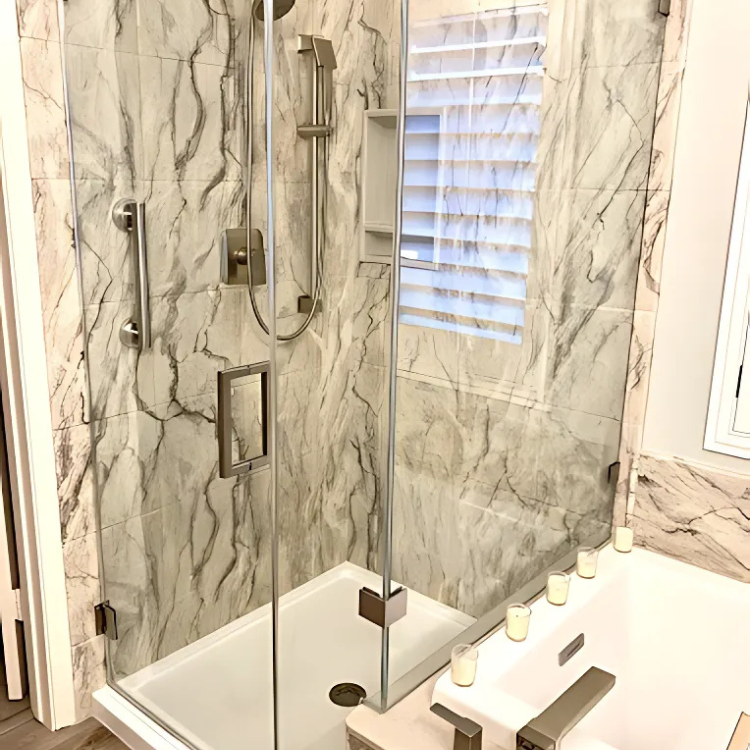
Shower Doors That Transform Morning Routines Instantly
Last winter, I met a homeowner in Dallas who was ready to remodel—mostly because their bathroom felt “stuck in the past.” The shower itself was fine, but the framed doors made the enclosure look smaller, and the metal channels trapped hard-water residue. By the time they finished brushing their teeth, the door already looked cloudy.
That’s a common trigger we hear in North Texas: you don’t notice the shower glass every day—until you do. A new shower enclosure (especially frameless shower doors) can change how the whole morning routine feels by opening the visual space, improving water containment, and making the glass easier to keep clear.
Below is what we see most often in Dallas-area remodels, why some replacements fail early, and how to plan a shower door system that looks sharp and stays that way.
Quick Answer
Frameless shower doors and custom glass shower enclosures can make mornings faster and bathrooms feel larger by reducing bulky framing, improving water management, and using cleaner lines. The biggest drivers of performance are correct measurements, proper glass thickness, accurate hardware alignment, and good installation details (like hinge/pivot placement and slope). In Dallas and the broader North Texas area, hard water also matters—your door hardware and glass treatment plan should be part of the design, not an afterthought.
Why Frameless Glass Changes the Way a Bathroom Feels
When homeowners say their bathroom “feels smaller,” it’s rarely the tile or lighting. It’s usually the visual weight of the shower system:
- Framed doors add dark lines and metal bulk that break up the room.
- Thick channels and gaskets can make the shower enclosure look segmented.
- Clouding residue builds faster when cleaning requires scrubbing into tight edges.
In our installs, the biggest “instant improvement” isn’t just aesthetics—it’s how the enclosure functions. When the door is properly aligned and the panel layout matches the shower opening, water tends to stay where it belongs. That means less cleanup around the threshold and fewer wet surprises after a quick shower.
If you’re exploring modern options, you’ll likely want to compare glass layouts. For a closer look at different building styles, see frameless shower door solutions and how they’re typically configured for clean lines.
Frameless vs Semi-Frameless Shower Doors
Most buyers start with “frameless,” but the real choice often becomes “How clean do you want the lines, and how much structure do you want built into the system?”
| Type | Visual Profile | Typical Use Case | Maintenance Reality |
|---|---|---|---|
| Semi-frameless | Some framing detail | Budget-sensitive remodels or certain layouts | More edges/joints to clean; may reduce some installation constraints |
Our installer observation
In day-to-day work, frameless systems usually “read” more expensive because they reduce the number of visual breaks. But semi-frameless can be a practical choice when the shower opening isn’t perfectly square or when the existing tile substrate has minor irregularities. The key is matching the door system to the reality of the bathroom—not the brochure.
For some homeowners, the best path is planning the entire enclosure first. If you’re deciding on the layout, shower enclosures are often where the decision gets clearer, because the door style depends on the opening, wall alignment, and water flow.
What Homeowners Often Overlook
1) Slope and water behavior
People focus on the door, but water management starts underneath. Even a beautiful door can look “wrong” if the shower floor slope causes pooling or if water repeatedly hits the wrong edge of the glass.
2) Measurement timing
In a remodel, the opening changes as tile, backer board, and waterproofing come together. If a shower door template is taken too early—or the glass is planned without confirming final tile thickness—you can end up with:
- misaligned panels
- uneven gaps
- hardware that doesn’t sit correctly over time
3) Dallas hard water and “invisible buildup”
North Texas water can leave mineral deposits that gradually change glass clarity. That’s why we talk about maintenance planning during selection—not after installation.
A Common Mistake Homeowners Make (and How It Shows Up)
Mistake: choosing the door style without checking the shower layout
I’ve seen remodel plans where the homeowner fell in love with a specific look—like a pivot or hinged setup—before confirming the actual opening depth, wall angles, and how the door swings interacts with the bathroom clearance.
What happens next is predictable:
- the door doesn’t close smoothly
- water escapes at the threshold because the panel isn’t positioned to “catch” flow
- the hardware gets stressed because it’s forced into alignment
The result is usually noticeable within months: corrosion risk increases at stressed hardware points, and the door may start to feel less solid when opening/closing. In a place like Dallas where humidity and hard water are consistent, hardware longevity matters.
Shower Glass Planning Checklist (Do This Before You Order)
Use this as a quick sanity check with your contractor or glass installer:
- Confirm your shower style: corner, neo angle, alcove, or custom glass panels configuration
- Verify opening measurements after tile (not before)
- Choose glass thickness appropriate to the system (thicker glass often feels more stable and can reduce visual “drift”)
- Plan for hardware type: hinges, pivots, or sliding tracks based on space
- Decide how you want water contained: door seal strategy, threshold approach, and panel overlap
- Think about cleaning access: can you reach edges and hardware without disassembling anything?
- Plan for hard-water maintenance: a routine that prevents mineral buildup from etching over time
Best hardware/recommendation
If you’re working with limited bathroom space, a sliding system can be the most practical. We often recommend sliding shower enclosure options when the door swing would interfere with vanity clearance or when the layout needs to stay open during mornings with multiple people getting ready.
Signs It’s Time to Replace Shower Glass
Even high-quality glass eventually shows wear. You don’t always need full demolition, but replacement becomes worth considering when you notice:
- Persistent cloudiness that doesn’t improve with normal cleaning
- Seal wear—water pooling outside the shower after every use
- Hardware looseness (hinges/pivots that don’t feel firm)
- Cracks, chips, or edge damage that compromises safety
- A door that no longer aligns correctly after prior repairs
If your goal is a cleaner look and easier upkeep, replacing the shower door system is often a faster win than regrouting or repainting surrounding areas.
Our Experience Installing Glass Systems in Texas Homes
Texas bathrooms are a mix of modern openness and everyday wear. In many Dallas remodels, we’re upgrading more than the shower. Homeowners want glass that looks intentional from the hallway all the way into the shower—especially in open-concept layouts where sightlines are continuous.
One firsthand pattern we see: tile is frequently upgraded first, and then the glass decision gets made “on the fly.” That’s where systems can feel mismatched. When the door and enclosure don’t align with the tile rhythm, it can look like an add-on instead of a finished architectural detail.
A better approach is to design the enclosure as part of the architecture—especially when you’re also considering other interior glass elements.
For example, if you’re upgrading multiple glass surfaces during the remodel, you may appreciate coordinated planning like custom interior glass upgrades that keep lines consistent across spaces.
Dallas or North Texas Relevance: Why Local Water and Layouts Matter
In Dallas and the surrounding North Texas area, hard water isn’t theoretical—it shows up on glass within weeks. That affects everything from clarity and spotting to how quickly edges and hardware collect residue.
Local remodel realities also play a role:
- Many homes have tighter bathroom footprints than people expect.
- Closets, linen storage, and vanity placement limit door swing options.
- Remodels often reuse shower pans or partially rebuild walls, making alignment critical.
That’s why we pay attention to how the enclosure is built around the existing structure. A “perfect-looking” door on paper can still underperform if the walls aren’t true or if the enclosure wasn’t templated correctly after tile.
An Example Project Case (Anonymized, Realistic)
A Dallas-area homeowner had a framed shower enclosure that trapped water and made cleaning feel like a chore. The shower had a corner layout and a niche they didn’t want to change. Their priority was a cleaner visual line and less cleanup.
What we did:
- Confirmed final tile thickness and niche depth before templating
- Chose a frameless configuration with hardware placement designed to keep the door aligned under daily use
- Adjusted panel layout so water behavior matched the threshold and door edge
- Built in a maintenance plan based on expected hard-water spotting
The outcome wasn’t just “it looks better.” The homeowner reported that after a quick morning shower, the glass stayed clearer longer and the bathroom floor stayed drier around the threshold. They also liked how the shower felt bigger—because the visual metal bulk was gone, the bathroom opened up without changing the room’s footprint.
What We Commonly See in Dallas Bathroom Remodels
Here are a few patterns that keep coming up:
- New tile, old hardware: people replace aesthetics but keep aging door components.
- No plan for cleaning: glass is chosen for looks, then homeowners realize the design makes buildup harder to reach.
- Underestimating alignment sensitivity: the more minimalist the system, the more it depends on precision during installation.
- Mismatch between door swing and daily flow: pivot/hinged doors can be beautiful but frustrating if clearance is tight.
When we work with homeowners early, the process is smoother because the glass plan supports how the space is actually used.
Maintenance & Planning Checklist (Keep It Clear for Years)
Here’s a practical routine that fits real life:
- After showers: wipe down the glass door/pan with a squeegee or microfiber cloth
- Weekly: use a glass-safe cleaner to remove mineral deposits before they build up
- Avoid harsh abrasives on coatings or edges
- Monthly: check hardware tightness and alignment (especially on pivot points)
- Inspect seals: if you see gaps or persistent water leakage, address it early
If you’re considering decorative options, you can also explore custom etched glass for privacy while keeping the enclosure feeling airy.
Quick Guidance: Choosing a Shower Door Style
If your bathroom is tight:
- Consider sliding shower doors for space efficiency.
If you want maximum openness:
- Consider frameless glass shower doors for clean sightlines.
If you’re upgrading a full suite of glass elements:
- Consider coordinating your shower door with other architectural details like mirrors and interior panels.
For mirrors that match the upgraded look, many homeowners pair their enclosure with custom mirror installations so the bathroom has consistent framing, proportions, and placement.
Optional: When Custom Glass Panels Matter
Some showers aren’t standard alcoves or corners. In those cases, the best solution is often a custom layout that accounts for wall offsets, seating, or niche features.
If your project involves custom wall sections, partitions, or non-standard configurations, you may also want to review custom shower glass so the plan is built around your actual geometry.
Ready to Upgrade Your Bathroom or Interior Glass Design?
A great shower door doesn’t just look modern—it performs every day. The difference comes down to precision templating, correct hardware selection, and a glass plan that matches Dallas-area realities like hard water and bathroom layouts.
About Shower Doors of Dallas
Shower Doors of Dallas provides frameless shower doors, custom glass installations, shower enclosures, mirrors, stair rail glass, and architectural glass solutions throughout Dallas, TX and surrounding North Texas communities. The company focuses on precision craftsmanship, modern design, durable materials, and helping homeowners create brighter, cleaner, and more functional spaces through professional custom glass solutions.